
Glycine Dosage for Sleep: How Much Should You Take?
 Written by
Morgan Blake
Written by
Morgan Blake Published June 20, 2026 | Updated June 20, 2026 | 4 min read
On this page
If you’re going to try glycine for sleep, the dosing is refreshingly simple. There’s one number that matters, and unlike magnesium, there’s no confusing “elemental” math to do.
Where the 3 g dose comes from
The human studies on glycine and sleep - the ones showing faster sleep onset, better sleep quality, and less next-day fatigue - used about 3 grams taken before bed. So 3 g isn’t a marketing number; it’s the studied dose, which is exactly what you want to start with. (For the full benefits and how it works, see the hub: glycine for sleep.)
How much glycine for sleep
- Standard dose: 3 g (3,000 mg) before bed.
- Cautious start: if you have a sensitive stomach, begin at 1-2 g and build up to 3 g over a few nights.
- Upper end: there’s little evidence that going much beyond 3-5 g helps more, and higher doses (around 9 g+) can cause mild nausea or soft stools. More is not better here.
How many capsules is 3 grams?
| Product format | To reach 3 g |
|---|---|
| 1,000 mg capsules | 3 capsules |
| 500 mg capsules | 6 capsules |
| Powder | ~⅔ teaspoon (it’s mildly sweet, dissolves in water) |
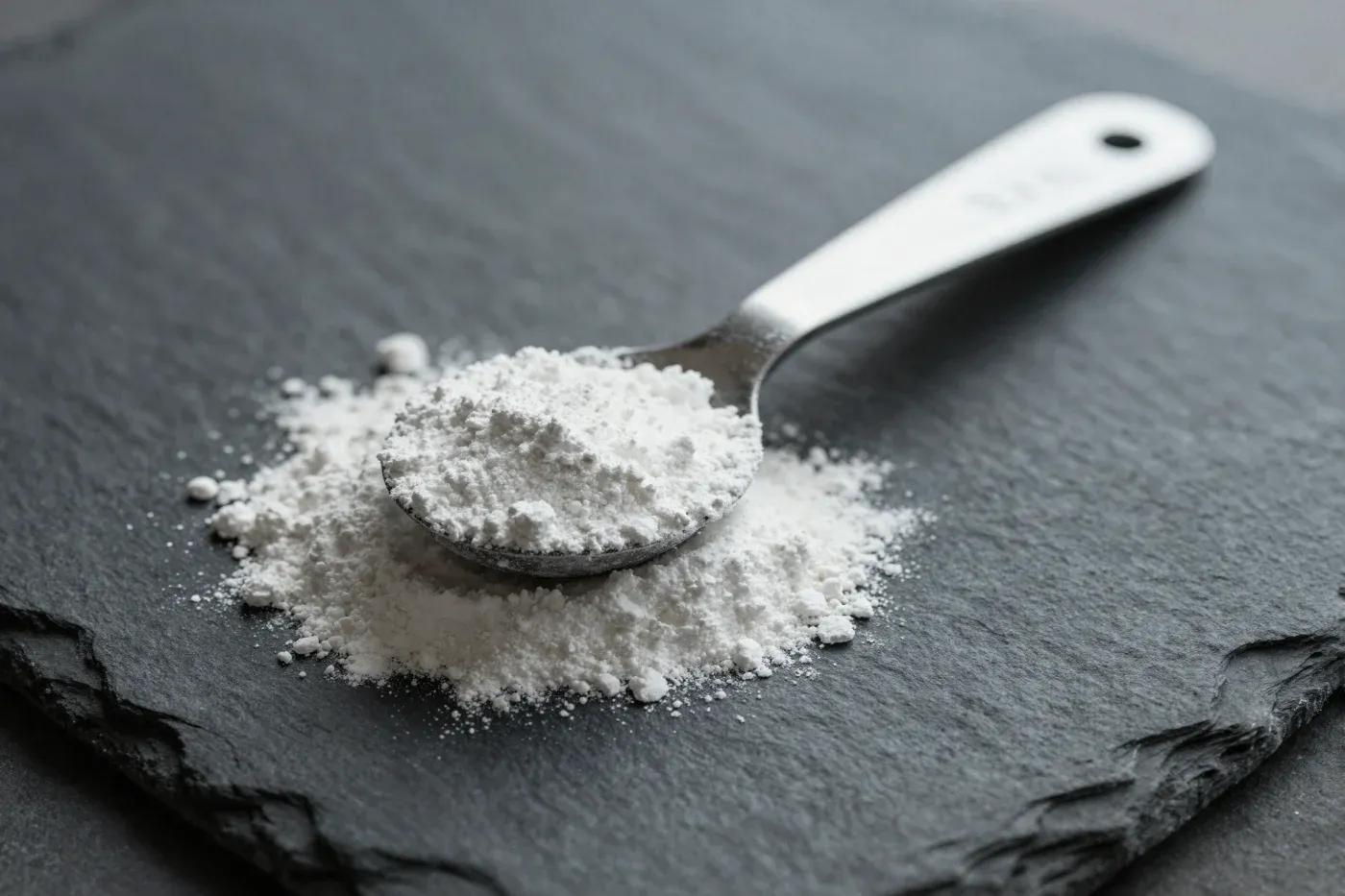
At 3 g, powder is usually the most convenient - one scoop beats swallowing several capsules. More on that route: glycine powder for sleep.
When to take glycine for sleep
- Timing: 30-60 minutes before bed.
- With or without food: either is fine - no meal needed. Many people just stir the powder into a little water or herbal tea as part of winding down.
- Consistency: glycine can be taken as needed, but if you’re testing whether it helps you, use it nightly for a couple of weeks and judge the trend, not a single night.
How to start (a simple plan)
- Night 1-2: 1-2 g, 30-60 min before bed (if you want to ease in).
- Night 3+: move to the full 3 g.
- Hold at 3 g - that’s the studied, effective dose. No need to climb higher.
- If you get mild stomach upset, drop back a gram.
The bottom line
Keep it simple: 3 g of glycine, 30-60 minutes before bed, ideally as powder for convenience. Ease in from 1-2 g if your stomach is sensitive, don’t bother going above 3-5 g, and give it a couple of consistent weeks. Because glycine is a single amino acid, the label number is the real dose - no math required.
Frequently Asked Questions
How much glycine should I take for sleep?
About 3 grams (3,000 mg) - that's the dose used in the sleep studies. Start there. If you're cautious or have a sensitive stomach, you can begin at 1-2 g and work up. There's little evidence that going much above 3-5 g helps more, and high doses can cause mild stomach upset.
When should I take glycine for sleep?
Take it 30-60 minutes before bed. It can be taken on an empty stomach or with a little water or herbal tea - no food required.
How many glycine capsules is 3 grams?
It depends on the capsule strength: 3 g is three 1,000 mg capsules, or six 500 mg capsules. Because glycine is a single amino acid, the milligrams on the label are the actual glycine - there's no 'elemental' conversion like there is with magnesium. Powder (about ⅔ teaspoon) is often easier at this dose.
Can you take too much glycine?
At the studied 3 g dose, glycine is well tolerated. Very high doses (roughly 9 g or more) can cause mild nausea or soft stools in some people, and offer no proven extra benefit for sleep - so there's no reason to push the dose up.
Can I take glycine every night?
For most healthy adults, yes - nightly use at around 3 g is generally well tolerated. Check with a doctor first if you're pregnant or breastfeeding, or take clozapine (glycine may reduce its effect).
References
- New therapeutic strategy for amino acid medicine: glycine improves the quality of sleep (Bannai M, Kawai N, 2012)(PubMed (J Pharmacol Sci))
- The sleep-promoting and hypothermic effects of glycine are mediated by NMDA receptors in the suprachiasmatic nucleus (Kawai N, et al., 2015)(PubMed (Neuropsychopharmacology))
- The effects of glycine on subjective daytime performance in partially sleep-restricted healthy volunteers (Bannai M, et al., 2012)(PubMed (Front Neurol))
Related reading
Cluster hub: Glycine for Sleep
Glycine for Sleep: Benefits, Dosage & How to Use It
Glycine can help you fall asleep faster and improve sleep quality at about 3 g before bed. Evidence, dose, and how it differs from magnesium glycinate.
Best Magnesium for Sleep: Which Type Actually Works
Magnesium glycinate is the best magnesium for sleep for most people. Here's how the types compare, the right dose, timing, and who should be careful.
How Long Does Magnesium Take to Work for Sleep?
Magnesium isn't instant. Some feel calmer night one, but real sleep benefits build over 2-4 weeks of daily use. Here's the realistic timeline.
How Much Magnesium Glycinate for Sleep? (Dosage Guide)
Most people take 200-350 mg of elemental magnesium glycinate about 1-2 hours before bed. Here's how to dose it, when to take it, and how to start safely.
This content is for informational purposes only and is not medical advice. Consult a qualified healthcare professional before starting any supplement.